

The smallest literary habit that actually sticks is one notification, one poem, every morning. And if you watch what people save, forward and set as their status, the daily poem is very often a love poem. Bhalobashar kobita, love poetry in Bangla, is the quiet engine of the poem-a-day habit, and the numbers in our own collection say why.
What the daily poem usually is
Our KobitaGhar collection holds 2,179 works, each with theme tags from our cataloguing. The love tag is the second largest shelf in the whole collection.
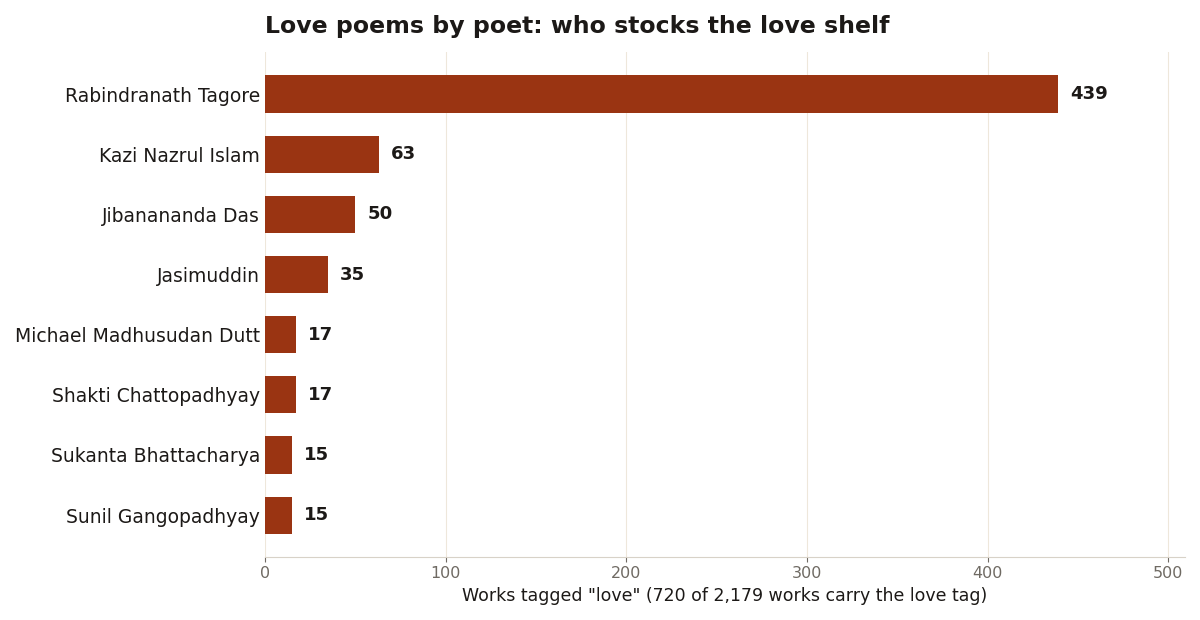
Seven hundred and twenty works carry the love tag, a third of the collection. Tagore wrote 439 of them, which means a love-poem-a-day habit could run on Tagore alone for over a year. Nazrul adds 63, Jibanananda Das 50 and Jasimuddin 35, and the long tail of other poets keeps the mornings from repeating. Count it against the habit itself: 720 love poems is two full years of daily notifications without a single repeat. No wonder the love shelf is where a poem-of-the-day app earns its keep.
The habit, in five rules
1. One notification, one poem, every morning. No feed, no choices, no decisions before tea.
2. Read the single line first: "Chitto jetha bhayshunyo" or "Hazar bochhor dhore ami poth hatitechi." Let it sit while the tea brews.
3. Save the ones that stop you. Favorites become your personal anthology in a month.
4. Share the rare ones. A poem that moved you at 7 am deserves your WhatsApp status by 8.
5. Never skip two days. One missed day is life; two is a broken habit.
Love six days a week, and one day for the river
A daily habit fed only on love poems can go stale by the second month, so borrow the collection's own proportions for a weekly rhythm. The shelves, counted: nature 863 works, love 720, devotion 624, sorrow 610, then joy at 351, monsoon 323, hope 319 and river 301. Bengali poetry thinks about the natural world even more than it thinks about love, which surprises people until they remember the rivers.
So let the app, or your own saved list, run love poems on most mornings, since that is what the habit is for, and give one morning a week to each of the other great shelves. A nature poem on the first day of the month. A devotional poem on a Friday. A sorrow poem when the week honestly calls for one, because pretending otherwise is not optimism. The rotation keeps the love poems fresh by contrast, the way a sweet dish needs salt somewhere in the meal.
After a month of this, look at what you saved. Most people find their favorites cluster in two or three shelves, and that cluster is a small self-portrait. The anthology you build by saving, 365 mornings at a time, ends up saying as much about the reader as about the poets.
What makes a good daily line, technically? It has to survive being read half awake, which rules out poems that need their first three stanzas for context. The lines that work are the ones built like proverbs: complete in themselves, with an image that opens rather than closes. "Hazar bochhor dhore ami poth hatitechi" works because a whole life is inside it. When you judge a poem-of-the-day app, judge it on this: does it send openings, or does it send fragments? Fragments frustrate. Openings follow you to the office.
It also helps to keep the notification boring in every way except the poem. Same time, same place, no badges, no streak counters shouting for attention. The habit survives on quietness. The poem is the event; everything else is the envelope, and nobody keeps envelopes.
Send the morning line onward
Rule four is easier with the right tool. Our free Kobita Card Maker turns the morning's two best lines into a tidy image card, sized for a WhatsApp status or a Facebook post, with the poet credited. It takes under a minute, which matters, because the tea is getting cold.
A poem a day is 365 poems a year. That is more Bengali poetry than most literature students read in college, and with 720 love poems alone on the shelf, the well does not run dry in year two either. Small, daily, unstoppable, and it starts before the tea cools. Sources: Banglapedia.